
Do Gutter Guards Need Maintenance? An Honest Answer
8 min read
Maintenance-free gutter guards are a myth. What still builds up on micro-mesh in Florida, where, how often to check, and how to rinse it.
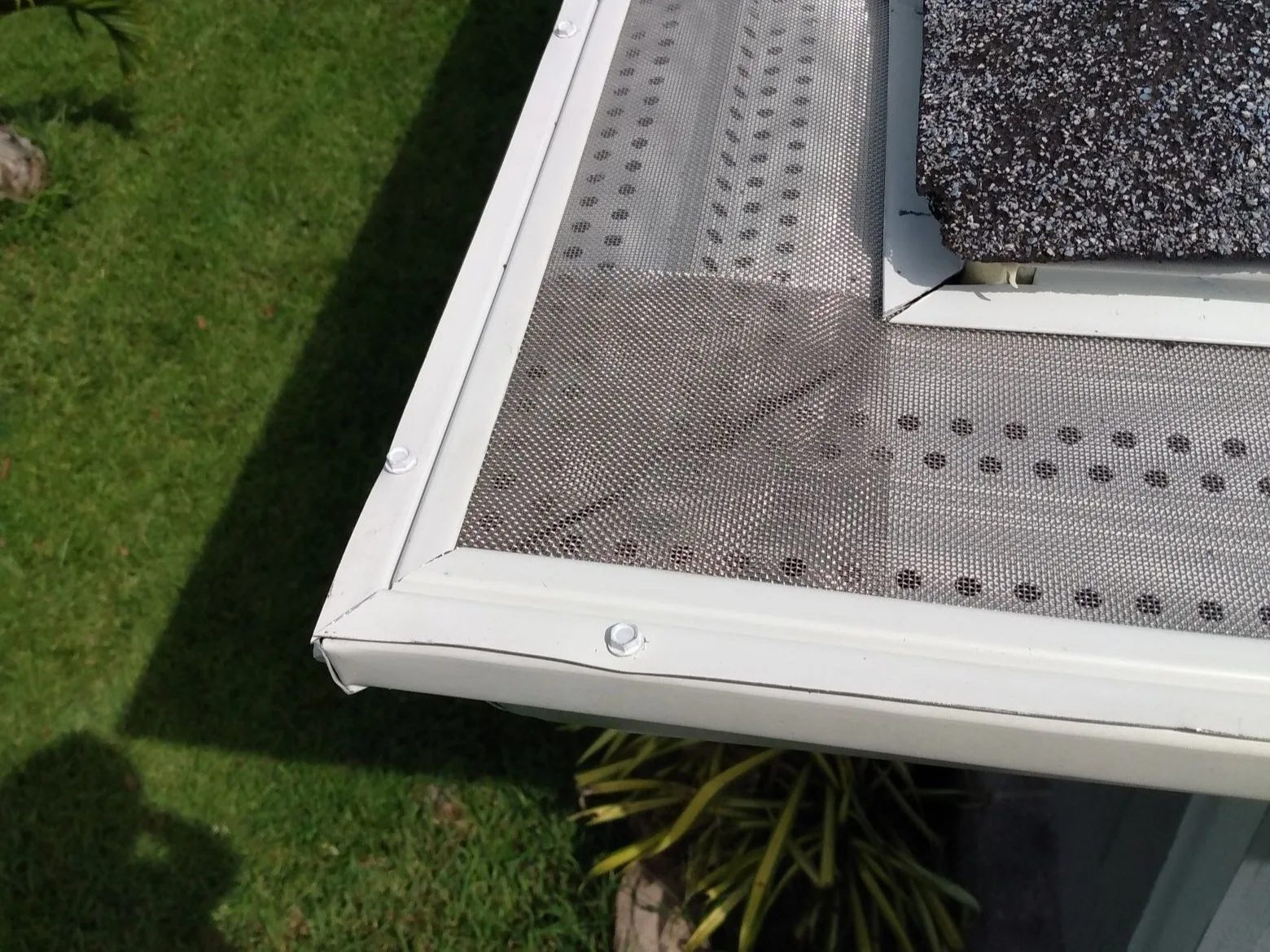
Plenty of gutter guard ads promise you will never clean your gutters again. Ask Chris, who runs every estimate at Rain Storm Solutions, and you get a different answer, the same one he gives homeowners across Hernando, Pasco and Citrus counties: maintenance-free gutter guards are a myth.
That does not mean guards are not worth it. A good micro-mesh guard turns gutter cleaning from a ladder job full of wet leaves into an occasional rinse. But “occasional” is not “never,” and knowing what builds up, where, and when will keep your guards working for the long haul. Here is the honest version.
Why No Guard Is Maintenance-Free
A gutter guard is a filter. It lets water through and holds everything else on top, where wind and rain can carry it off. Most of the time that works. But a filter that holds debris back can also hold some of it in place, and the very finest material can get through.
The independent reviewers agree on this. This Old House says micro-mesh guards should be cleaned once or twice a year, and that homes surrounded by pine trees may need it more often because of fine needle buildup (This Old House). Bob Vila’s testers say the same: gutters and guards usually need cleaning only once or twice a year, and you should still watch for tiny pieces of roof dirt that get through and need brushing out (Bob Vila).
Even a big guard brand admits it. LeafFilter’s own blog says no gutter protection system is 100 percent maintenance-free (LeafFilter). When the company selling the product says so, believe it.
So the real question is not “will I ever have to clean them,” it is “how much, and how hard.” With a good micro-mesh guard, the answer is: a little, and not very.
What Still Builds Up on Guards in Florida
Our trees are not the trees in most gutter guard ads. The typical home we put guards on has oaks and pines, and each one leaves something different behind.
- Pine needles. Slash pine needles run 6 to 12 inches long (UF/IFAS). On a coarse screen they thread through the holes and pack underneath. On fine micro-mesh they stay on top, which is why This Old House says homes surrounded by pines may need cleaning more often. On every home with pine trees, we install ONE Gutter Guard.
- Pollen. The University of Florida puts the state’s pollen season at about January through June, at its height in March and April, with oaks producing plenty of pollen as early as February (UF/IFAS). This Old House calls spring the season for pollen, seed pods and early tree debris that can collect on or beneath your guards.
- Roof grit. Tiny pieces of roof dirt can wash through the mesh into the gutter. This is what the Bob Vila testers say needs brushing out.
- Sediment underneath. This Old House lists sediment collecting under the guard as something to check for.
None of this is a clog in the old sense. It is a thin layer that, left alone for years, can slow the water enough to cause overflow in a hard rain.
Have guards that overflow, or no guards yet and tired of the ladder? Call (727) 857-3714 or get a free estimate.
How Much Upkeep, by Guard Type
The type of guard makes a big difference in how often you are up there. This Old House gives these cleaning schedules for each common type (This Old House):
| Guard type | How often to clean | The usual problem |
|---|---|---|
| Micro-mesh | Once or twice a year | Fine pine needle buildup on top, sediment underneath |
| Screen | 2 to 4 times a year | Smaller particles like pine needles slip through |
| Brush | 3 to 4 times a year | Debris settles into the bristles, needles tangle in them |
| Foam | 3 to 4 times a year (remove and rinse) | Mold and mildew in damp climates |
| Reverse curve | Once or twice a year | Keeping the front lip clear, more under dense trees |
Notice the pattern. Screen, brush and foam guards all let pine needles in or tangle them up, and they need cleaning two to four times as often. In a Florida yard full of slash pines, that is most of the reason to pick micro-mesh. Reverse curve guards need little cleaning on paper, but they depend on water following the curve, and a hard summer downpour can shoot right past it.
Where the Upkeep Happens: Splash Shields
Here is the part almost no one tells you. On a guarded gutter, most of the maintenance happens in one spot: where there is a splash shield.
A splash shield (also called a splash guard) is a small piece of metal installed where two roof slopes meet in a valley, or at an inside corner. A valley funnels a lot of water to one short stretch of gutter, fast enough to shoot right over the front edge in a heavy rain. The shield stops that overshoot and keeps the water in the gutter (This Old House).
The likely reason: a valley gathers water and debris from two roof slopes into one short stretch of gutter, and the shield is a raised edge where needles and leaves can catch. Chris covers this with homeowners at the estimate, because it tells you where to look. If you only check one spot on your house, check the valleys and the splash shields.
How Often to Check, and When
For most homes with micro-mesh guards, plan on a look once or twice a year, more if you have a lot of pines. A sensible Florida schedule:
- Late spring. After the peak of pollen season in March and April, rinse off what has built up before the summer storms start. In West Central Florida the rainy season starts around late May (National Weather Service, Tampa Bay), and you want the guards clear for it.
- Late fall. Bob Vila’s testers suggest a check once a year in late fall, lifting a few guards to look for anything that got underneath.
- After a big storm. Walk around the house and look for branches or piles of debris on the guards, and any guard that has shifted.
Between checks, the easiest test is the one you can do from the ground: watch your gutters in a hard rain. Water should disappear into the gutter. If it sheets over the front edge in one spot, that spot needs attention, and it is very often a valley.
How to Clean Micro-Mesh Guards Safely
The good news is that it is light work. This Old House says a garden hose and a soft brush usually work well for light cleaning, and suggests a professional for hard-to-reach areas or stubborn buildup (This Old House). Bob Vila adds that debris on top can come off with a leaf blower or a broom, and a hose rinse removes grime and shows you the gutters are draining (Bob Vila).
- Clear the loose stuff first. Brush or blow needles and leaves off the top, working toward the ground, not into the gutter.
- Rinse with a garden hose. Normal pressure, spraying across the mesh to wash pollen and grit off the surface.
- Look at the valleys and splash shields. Clear anything caught there.
- Watch the downspouts. Water should run out freely at the bottom.
- Check the guard itself. This Old House suggests making sure the mesh is intact, the frame is secure, and no sediment has collected underneath.
Stick to a garden hose and a soft brush. If your house is two stories or the roof is steep, do not get on a ladder. Call someone. A rinse is not worth a fall.
Is It Still Worth It?
Yes, for most homes under Florida trees. The difference is what the work looks like. Without guards, cleaning means scooping wet, packed debris out of the trough by hand. With good micro-mesh guards, it means a rinse and a look at the valleys.
What makes the difference is the guard. Screens, foam and plastic guards let needles thread in or warp in the sun, which is how people end up with guards that do not work at all (we cover that on gutter guards that still clog). We install two stainless micro-mesh systems. ONE Gutter Guard has an aluminum frame and 316 stainless steel mesh, and fits both 5 inch and 6 inch gutters, so it often goes on the gutters you already have. It carries a 20-year performance warranty from its maker. Lock N Mesh is the other option on homes without pine trees.
If you are comparing guards, our guides to the best gutter guards for Florida and what gutter guards cost go deeper. When you are ready, Chris will come out, look at your roof and your trees, and tell you honestly what upkeep to expect on your house. Call (727) 857-3714 or get a free estimate. Rain Storm Solutions is a Florida Certified Specialty Contractor, license SCC131154760, and does not use subcontractors.
Want Chris to look at your home? Free on-site quote within 24 to 72 hours. Call (727) 857-3714 Get a Free Quote
Have Chris look at your home
Free on-site quote within 24 to 72 hours.
Florida Certified Specialty Contractor, license SCC131154760