
Best Gutter Material for Florida (2026 Guide)
9 min read
Best gutter material for Florida, ranked by how each one actually holds up to our UV, humidity, and Gulf salt air. A Nature Coast installer breaks it down.
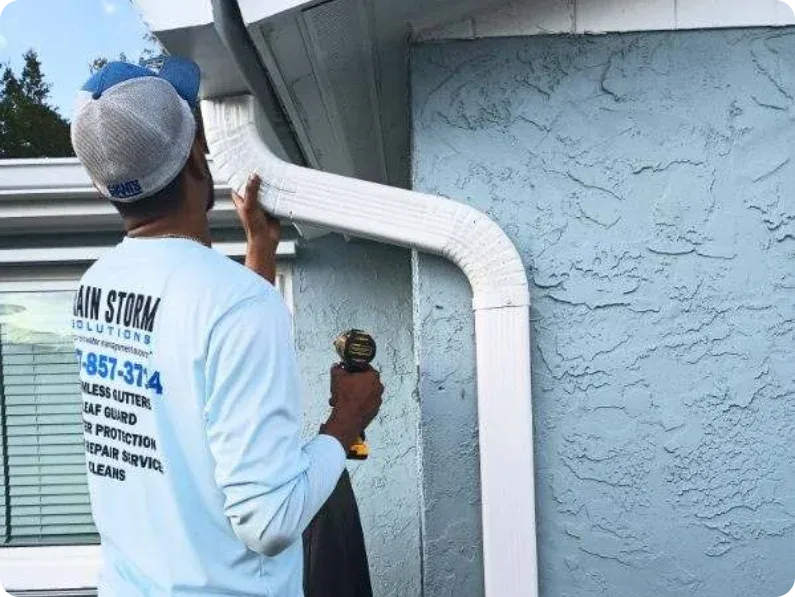
Most gutter buying guides rank materials like the gutters are going on a house in Ohio. Down here the ranking changes, because the things that destroy a gutter in Florida are not the things that destroy one up north. We do not fight ice and snow load. We fight relentless UV, months of humidity, 50-plus inches of rain a year, and on the coast, salt air that eats cheap metal alive. This guide ranks the four common gutter materials, plus zinc, on one question only: how long will it actually last on a Florida home.
What this guide covers:
- The five materials you will be quoted, and how each one holds up to Florida heat, humidity, and salt
- Why aluminum is the right call for almost every Nature Coast home
- Gutter gauge, and why a heavier aluminum matters before storm season
- What changes when you live near the Gulf in Hudson, Weeki Wachee, or Hernando Beach
Aluminum: The Right Call for Almost Every Florida Home
Start here, because for most homes on the Nature Coast the decision ends here too. Aluminum is rust-proof, it shrugs off heat and humidity, and it costs a fraction of the premium metals. Bob Vila puts it plainly: aluminum will not rust, and it lasts roughly 25 years. This Old House says aluminum gutters can last up to 30 years if you carefully maintain them, and calls the material durable and rust-resistant. Its broader gutter guide says aluminum offers “the best balance of cost, durability, and corrosion resistance for most homes.”
That rust-proof part is the whole game in Florida. We have humidity nine months of the year and salt in the air on the coast, and aluminum simply does not corrode the way steel does. It is also light enough to hang cleanly off your fascia and form on site into one continuous run, which is exactly why seamless gutters are made from it.
There is one honest tradeoff. Aluminum expands and contracts as the temperature swings, and on a sectional, snap-together gutter that daily movement works the caulk loose at every joint until the seams leak. This Old House names this directly: temperature shifts dry out the caulk and cause leaks where sections connect. The fix is not a different metal, it is fewer seams. That is the entire argument for seamless aluminum gutters, formed in one piece on your driveway so the only joints are at the corners and downspouts, where they belong. Our seamless gutter installation page walks through how that run gets built and hung.
Vinyl: The Cheapest Quote, and the One to Skip in Florida
Vinyl will almost always be the lowest number on your estimate. It is also the material we tell Florida homeowners to walk away from, and the reason is sitting in your front yard nine hours a day: the sun.
Vinyl does not handle UV and heat. Bob Vila calls it the least durable gutter material, notes it fades in strong sun, and warns it becomes brittle in high-heat climates. This Old House backs that up, listing vinyl at a 10 to 15 year lifespan and warning it can warp when exposed to extreme heat and get blown away by high winds. Read those failure modes again, brittle from heat, warping from heat, blowing off in wind, and then picture a Spring Hill summer followed by a tropical system. That is the worst possible climate for the material.
The savings do not survive it. A vinyl run that fades, turns brittle and warps gets replaced long before an aluminum run is even middle-aged. You pay twice. In a milder climate vinyl can be a reasonable budget pick. In Florida it is a false economy, and it is the one material in this guide we steer people away from.
Want the right material for your home? Call (727) 857-3714 or get a free estimate.
Steel and Galvanized: Strong, but It Rusts Down Here
Steel is genuinely tough. It resists denting better than aluminum and stands up to physical abuse. If denting were the only enemy, steel would win. But the enemy in Florida is corrosion, and steel loses that fight.
Galvanized steel is regular steel wrapped in a thin zinc coating that holds rust off for a while. The problem is the word “a while.” Bob Vila notes that most steel gutters are galvanized to slow rust, but oxidation generally takes hold within 10 to 15 years anyway, and that piles of wet leaves speed it up. This Old House explains the mechanism: once that zinc coating wears off, the steel underneath starts to rust, and salt water in the air near coastlines can degrade the coating more quickly.
That last line is the dealbreaker for the Nature Coast. We have wet leaf litter from slash pine and live oak sitting in gutters, we have humidity year round, and along the water we have salt. Every one of those accelerates the exact failure steel is prone to. Stainless steel resists rust far better, but it is expensive and harder to install, which knocks it out of the running for a normal home. Put simply: steel is built to beat a problem we do not have (impact) and loses to the problem we do have (corrosion).
Copper: Beautiful, Decades of Life, and a Premium Price
Copper is the real thing. It is the most durable common gutter material and it lasts longer than anything else on this list. Bob Vila says copper can last up to 100 years when properly installed and welded, and calls it unfazed by any weather from highest heat to coldest freeze. This Old House says copper lasts 50 to 100 years or more with proper maintenance and notes it is resistant to weather and corrosion. It does not rust, it handles our heat without flinching, and it ages into a patina a lot of people pay specifically to get.
So why is it not the default? Two reasons. The first is the price, which is several times the cost of aluminum, enough that copper is a look-and-legacy decision rather than a value one. The second is that copper has to be soldered and professionally installed, so you cannot DIY a dollar of it. For a historic home, a custom build, or a homeowner who wants the architectural statement and plans to stay forever, copper is a defensible splurge. For the typical Spring Hill or Brooksville ranch that needs gutters that work and last, you are paying many times over for an upgrade the house does not need. If you want the actual dollar spread between materials, our guide on how much gutters cost in Florida lays out the by-material numbers side by side.
Zinc: Real, Rare, and Not for Most Florida Homes
Zinc is the material almost nobody gets quoted, and that is mostly fair. It is excellent in the right setting: This Old House reports zinc gutters can last 50 years or more even in harsh environments, because zinc grows its own protective patina of metallic oxides instead of relying on a man-made coating.
The catches make it a poor fit for a normal Florida home. Zinc requires skilled professionals and soldered joints, which puts it in the same custom-fabrication price tier as copper, and the same source notes it gets marketed and priced as a luxury product, often for high-end, historic, or architecturally significant homes. On the coast, the sources disagree: This Old House says zinc resists corrosion from salt air, while Bob Vila calls it somewhat intolerant to salty air. Between the price, the specialty install, and that open question, zinc is a niche choice. We mention it so the list is complete, not because it belongs on most homes here.
How the Materials Compare for a Florida Home
Here is the whole field on the questions that matter down here. This is a durability and fit comparison, not a price sheet. For the dollar figures by material, see the cost guide.
| Material | Typical lifespan | Rusts? | Holds up to FL heat and UV | Best fit for the Nature Coast |
|---|---|---|---|---|
| Aluminum | About 20 to 30 years | No | Yes | Almost every home, the value pick |
| Vinyl | 10 to 15 years | No | No, gets brittle and warps | Skip it down here |
| Galvanized steel | Rust starts in 10 to 15 years | Yes, faster near salt | Tolerates heat, loses to humidity | Poor fit, corrodes |
| Copper | Up to 50 to 100 years | No | Yes | Premium or historic homes only |
| Zinc | 50-plus years | No | Yes; sources disagree on salt air | Rare, luxury homes |
Lifespans above are from This Old House, Bob Vila, and Angi. Read top to bottom, aluminum is the only material that clears every Florida-specific hurdle without a six-figure-home price tag attached. That is not a coincidence, and it is why we hang seamless aluminum on the vast majority of homes across Hernando, Pasco, Citrus, and Sumter.
Gauge: Ask How Thick the Aluminum Is
Picking aluminum is half the decision. The other half is how thick the aluminum is, and most homeowners never get told there is a choice. Gutter aluminum comes in different gauges, which is just the thickness of the metal. This Old House lists a lightweight .025 inch and a medium-weight .032 inch, and its experts recommend the thicker .032 inch aluminum “for greater stability and strength,” especially where falling branches or severe weather are common.
Our standard is .027 inch aluminum, a step up from the .025 inch lightweight option. Whoever you call, ask which gauge is in the quote and write it down, because two prices that look alike can be two different thicknesses of metal.
The Salt-Coast Question: Hudson, Weeki Wachee, Hernando Beach
If your home is on or near the water, the calculus tightens, and it tightens in aluminum’s favor. Salt air is corrosive, and it is the single fastest way to kill a metal gutter. It is exactly why steel is off the table near the coast, This Old House specifically warns that salt water in the air near coastlines can degrade steel’s protective coating more quickly, and Bob Vila calls even high-end zinc somewhat intolerant to salty air.
Aluminum does not rust, which is most of the battle won. But on a salt-coast home the details around the gutter matter as much as the gutter itself: the fasteners and hardware holding the run to your fascia need to be corrosion-resistant too, or they fail while the aluminum is still fine. Our screws are stainless with color-coded heads, and some of our other hardware is zinc coated. If you are in Hudson, Weeki Wachee, or out by Hernando Beach, this is the part of the job to ask hard questions about.
The Bottom Line for the Nature Coast
For almost every home in our area, the answer is seamless aluminum, and the runners-up each fall out for a specific Florida reason. Vinyl gets brittle and warps in the sun. Steel rusts in our humidity and worse on the coast. Copper and zinc last beautifully but cost far more than a normal home needs to spend. Aluminum is rust-proof, handles the heat, forms into a true seamless run, and lasts decades, which is why it has been the default for good reason.
Rain Storm Solutions is family-owned and based in Spring Hill, led by an owner with more than 20 years in the trade, and we install seamless .027 aluminum gutters and stainless micro-mesh guards built for Florida weather across Hernando, Pasco, Citrus, and Sumter counties. We will measure your roofline, walk you through the right material and gauge for your specific home and how close you are to the water, and hand you a fair price in writing with no pressure. When you are ready, get a free estimate or call us at (727) 857-3714.
Want Chris to look at your home? Free on-site quote within 24 to 72 hours. Call (727) 857-3714 Get a Free Quote

Have Chris look at your home
Free on-site quote within 24 to 72 hours.
Florida Certified Specialty Contractor, license SCC131154760