
Should You Replace Your Gutters When You Replace Your Roof?
8 min read
Not always, but the roof edge and the gutter work together. How the drip edge and fascia connect them, and what to ask your roofer.
Based in Spring Hill, we work across Hernando, Pasco, Citrus and Sumter counties. Free on-site quote within 24 to 72 hours. Get a free quote
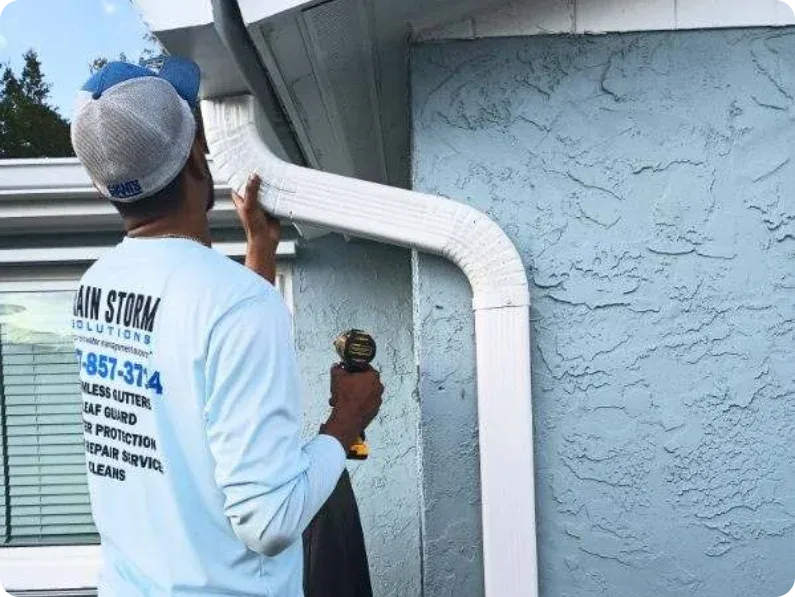
A new roof is a big check. Then a gutter company or a roofer says, “While we are here, you should do the gutters too.” Is that good advice, or an upsell?
Sometimes it is good advice. Sometimes your gutters are fine and should stay. The roof and the gutters meet along one thin line at the edge of the house, and what happens on that line decides whether water ends up in the gutter or behind it. Roofers send Rain Storm Solutions work, so we see the handoff from both sides. This guide covers how that line works, how to decide, and what to ask the roofer before the job starts.
The Short Answer
You do not have to replace your gutters because you replace your roof. If they are sound, straight, the right size and attached to solid wood, they can stay. What you do need is a plan, in writing, for what happens to them while the roof work is going on and for how the water will meet the gutter afterward.
Replace them when they are already failing: sagging, pulling away, leaking at the seams, rusting through, overflowing in normal rain, or sized too small for the roof. A new roof does not make a tired gutter any better, and doing both in one stretch means the edge is only disturbed once. Our guide to how long gutters last in Florida lists the signs, and the gutter replacement page explains how that job goes.
Keep reading for the part that gets missed most often: the drip edge.
Where the Roof Meets the Gutter
At the bottom edge of a shingle roof, a strip of bent metal called a drip edge sits under the shingles and hangs slightly off the roof. Its job is to carry water away from the wood. This Old House says it “helps to direct water into the gutters” and protects the fascia boards, the long boards the gutter hangs from.
The roofing maker IKO guide describes the drip edge as “directing water away from the fascia and into the gutter,” and says it should be set “aligning it so water will drip into the gutters.” In a reroof, the order matters: IKO says “before you install underlayment, you need to install drip edges at the eaves.” The eave is the low edge of the roof. So during a new roof, the roofer works along exactly the line where your gutter hangs.
That is the connection. The roofer sets the metal that decides where the water goes. The gutter has to be in the right spot to catch it. If those two do not line up, the roof can be perfect and the gutter can still miss most of the water.
The question to settle is who is responsible for the line between the roof and the gutter. Both trades touch it, and nobody owns it unless you ask.
What Goes Wrong at the Edge
Two stories from published sources show the failure.
First, an author writing in the Journal of Light Construction describes a house where the drip edge went on so tight to the fascia that he “couldn’t even fit a fingernail between the drip edge and the fascia board.” Water ran down the roof, wrapped around the metal and soaked behind the gutters, and over time rotted the wood. His fix was to pull the drip edge away from the fascia and add metal flashing behind the fascia, and he says a half-inch gap might have prevented the damage.
Second, the inspection website InspectAPedia lists mistakes it has seen, including a drip edge “placed too tightly against the fascia board,” and a gutter that “was installed atop rather than under the drip edge.” The page says the gutter should sit under the drip edge, not on top of it, and a moderator there says a setup is fine when the drip edge sits well off the fascia and the gutter is snug, so water falls into the gutter.
Note what each of these shares: nobody did anything dramatic. A gap a fingernail too small, or a gutter hung a little too high, lets water behind the gutter for years. You do not notice until the fascia is soft or a stain shows up on the wall. For more on how that rot starts, see our page on fascia rot from gutters.
Published guides do not agree on the exact size of the overhang. This Old House says the outer edge should extend about 3/4 inch beyond the fascia. IKO describes a lower flange of about 2 to 4 inches. Those are different parts of the metal, and the right figures depend on the profile and the roof. Treat the numbers as a reason to ask, not as a spec to hand your roofer.
The Wood Behind the Gutter
The third piece is the fascia. Gutters are screwed into it. A roof replacement is the time the edge of the house is most open to inspection, because the old drip edge and the shingles at the eave are being pulled off.
This Old House says, for fascia-mounted gutters, to check the fascia for rot and replace damaged sections before the gutter goes back up. A new roof on a soft edge, with a new gutter hung into it, is a poor bet. Our page on sagging gutters explains why the screw and the wood matter as much as the gutter.
Ask your roofer who looks at the fascia, who replaces any that is rotten, and how that is priced. It is a carpentry question. Get the answer before the old shingles come off, not after. Rain Storm’s estimates change in price only for unexpected bad wood found on the job, which is written into the contract, and any roofer or contractor should be able to tell you how they handle the same thing.
Keep or Replace: How to Decide
Use this plain sorting.
Keep the gutters if they are straight along the roofline, snug to the fascia, free of leaks and rust holes, big enough for the roof, and the wood behind them is firm. In that case, ask the roofer to take them down and put them back, or to work around them, and ask in writing who pays if they are damaged.
Replace them if more than one of these is true: they sag, they have pulled away, they leak at seams or corners, they overflow in an ordinary rain, they are stained and rusting, or you have no gutters at all on a section that needs them. Our page on builder gutters that are undersized covers the size problem, and what size gutters you need in Florida shows how to check.
Think hard about replacing them if the roof edge is being rebuilt and the old gutters are near the end of their life. The edge is being worked on anyway, and a worn gutter hung against a brand new roof edge is a mismatch you will see for years.
Timing in Florida adds one more factor. The National Weather Service in Tampa Bay lists the rainy season for the rest of West Central Florida as May 25 to October 10. If a new roof goes on in spring in Spring Hill or the towns around it, have the gutter plan ready before the heavy rain arrives, so you are not watching a brand new roof shed water straight onto the ground and the foundation.
What to Ask Your Roofer, and the Gutter Company
Bring these to the roofer, and get the answers in writing.
Will the gutters come off, and who puts them back? If they stay up, what protects them during tear-off?
Is a new drip edge going on at the eaves, and does it stand off the fascia so water falls into the gutter?
Who checks the fascia, who replaces any rotten board, and how is that priced?
If a gutter is damaged during the job, who pays?
And bring this to the gutter company: Do you hang gutters under the drip edge? On a mobile home with a metal roof, for example, Rain Storm’s standard attachment is behind the drip edge where that applies. Ask how the company you are considering handles it on your roof type. For more on that, see gutters for metal roofs in Florida and do mobile homes need gutters.
If the gutters are going to be new, the best order is usually roof first, gutters after, because the drip edge and any fascia work happen first and the gutter then hangs against finished metal. Check that with your own roofer and gutter company, since every house differs.
Chris measures and sketches the house in person at a free estimate, and the estimate is good for 30 days. Our gutter installation page shows what a new install includes, and the seamless gutters page shows how the gutter is made. To set up a visit in Spring Hill or anywhere near it, ask for an estimate or call (727) 857-3714.
Want Chris to look at your home? Free on-site quote within 24 to 72 hours. Call (727) 857-3714 Get a Free Quote
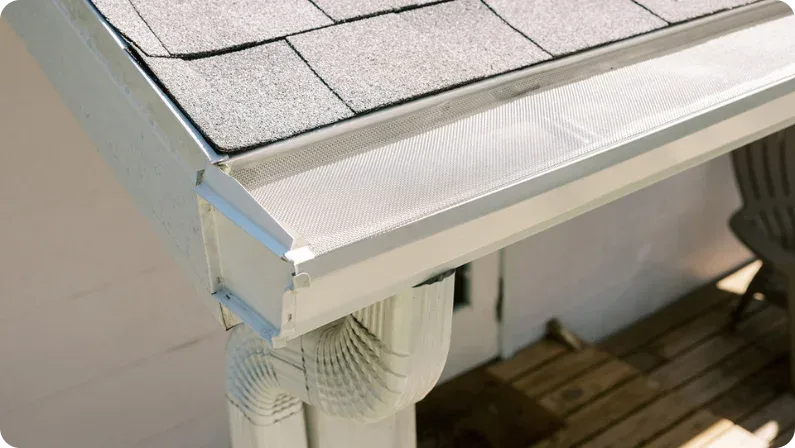
Thinking about new gutters?
Free on-site quote within 24 to 72 hours.
Florida Certified Specialty Contractor, license SCC131154760